Technology
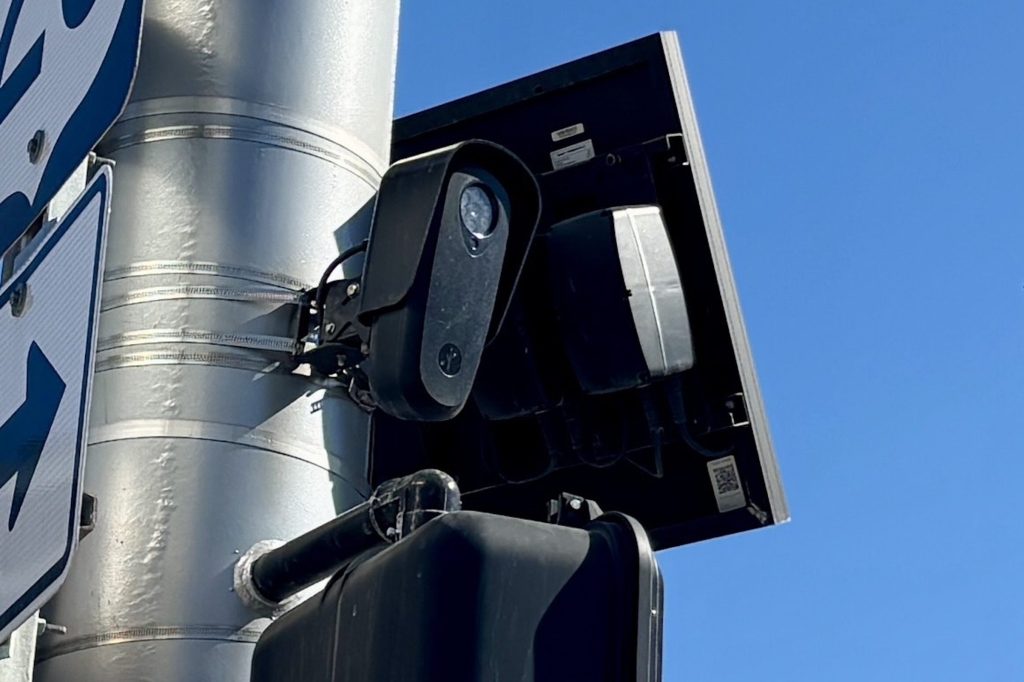
Cleveland looks to drop Flock, use Axon license plate readers
By Rodney Ellis
Advertisement · Why this ad?
Jasmine, a graduate of Kent State University, has spent the last five years covering local sports for several Cleveland outlets, including WKYC. With her deep passion for athletics, she brings a fresh and engaging perspective to reporting on the city’s teams and athletes.
More from Jasmine →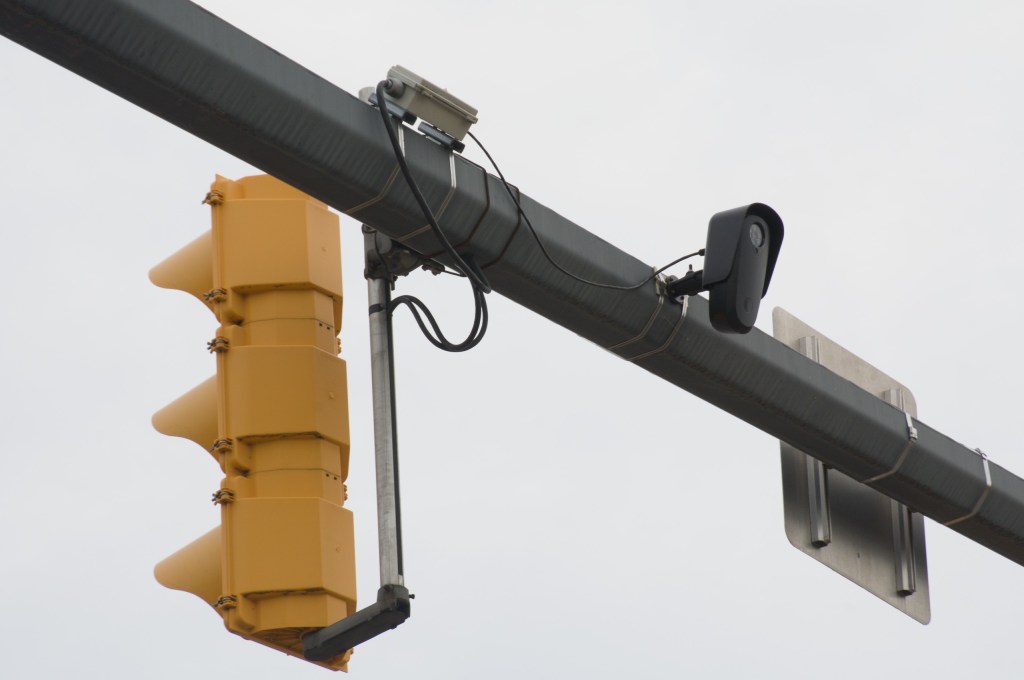
Summary The Cleveland Commission on Black Women and Girls (CBWG) and the Cleveland Community Police Commission (CPC) have concerns about the City of Cleveland’s use of automated license plate readers (ALPRs). Many questions exist regarding Flock data ownership and retention. CBWG has several vacant positions, including the position of chair. Follow-up questions Who are the commissioners who resigned, and what spots are open? Are additional community meetings regarding the Flock contract planned for the East Side? [Editor’s note: Find out more information about the community meetings and the survey seeking residents’ input here .] Brian Ray, director of the Center for Cybersecurity and Privacy Protection at the Cleveland State University College of Law , presented about automated license plate readers at the Oct. 22 meeting of the Cleveland Commission on Black Women and Girls. Ray’s history with automated license plates readers, also known as ALPRs, goes back to 2016. That’s when he participated in a conference that included representatives from Seattle and Oakland. He said those cities were trailblazers in evaluating privacy and civil liberty concerns around ALPRs. Hard questions and tradeoffs exist in trying to establish concrete public privacy protections, he said. The basics about automated license plate readers Ray explained the basic task of ALPRs is to “convert the license plate itself into a machine-readable format.” That format allows law enforcement officials to search for license plates. While the technology is not new, companies have upgraded it to provide more than just license plate information, including vehicle descriptions, as well as people’s clothing. Flock says that it does not use facial recognition, although the capability exists, according to Ray. Police departments maintain “hot lists” of cars used in crimes. Those lists are randomly scanned to see if there is history on a specific vehicle. Searches can also be done to see if any reports exist for the specific date and time of an incident. Privacy and civil liberty concerns Concerns are similar to existing cameras mounted throughout the community, Ray said. ALPRs are similar to but more advanced than other technologies, such as “ ShotSpotter .” Concerns arise based on the fact that law enforcement has access to these enhanced surveillance capabilities. Ray believes there is no way around the concerns other than putting controls and policies in place that restrict how ALPRs are used. Those policies should require transparency and accountability. Simply removing Flock will not solve the problem because another technology will take its place, he said. Join the movement for transparency Civic power can start with you! We train and pay Documenters to take notes at local government meetings and share them here. Learn more about becoming a Documenter . How effective are ALPRs at stopping crime? Commission Member Taneisha Fair: Statistically speaking, how effective are ALPRs in solving crimes? Are there any statistics on privacy risks? Ray is unaware of any specific studies, but is familiar with a 2026 working paper examining Flock deployment in 216 agencies that shows a 11% decline in vehicle theft after deployment (an unofficial finding). Flock has its own statistics available for review. Ray believes a cost/benefit study should be done as part of the policy and accountability document. How are mobile ALPRs used? Lita-Marie Wills asked for clarification regarding the mobile units. Wills asked how they are used, and what, if any, concerns there are? Ray said mobile units can be used anywhere and are used by industries such as repossession agencies. Scans are made in a stationary location, as cars drive by, or scanning license plates in parking lots , to see if there are any hits on any vehicles that are part of a prior report. Piet van Lier, member of the Community Police Commission (CPC), further clarified that in the City of Cleveland, most Flock cameras are stationary, though some police car dash cameras are equipped with Flock capability. More about ALPR vendors Flock and Axon Piet van Lier said the Community Police Commission is building an initiative around a resolution that pauses the use of ALPRs by the city until there are better protections around it . CPC has the final decision on police policy within the city (on paper), but works collaboratively with the police in establishing policies that work toward the reduction of crime and the safety of the community. His presentation focused on several slides ( included here ), starting with the Cleveland Division of Police General Order regarding ALPRs, 2026 CPC new concerns, Axon , ALPRs in Cleveland, CPC resolution as of 2026, proposed state legislation, and a CPC outreach plan . With regard to Axon, van Lier mentioned other Axon technologies like FUSUS and Gravity . The overarching concern posed by Axon is that Gravity combines all of Axon’s surveillance technologies, making it one huge privacy consideration. Some residents want ALPRs in their neighborhoods Stephanie Howse-Jones, a Cleveland City Council member and member of the Cleveland Commission on Black Women and Girls, conducted a non-scientific poll within her ward. She said about 35% of respondents wanted Flock within the ward. Van Lier hopes as many voices as possible are heard on the topic. Ray added that Flock has made good strides in tightening its policies as recommended by CSU’s Center for Cybersecurity and Privacy Protection. But, he said, additional guardrails addressing privacy are still needed. Who owns the data from ALPRs? Wills raised a question about who owns the Flock data. Howse-Jones explained that, based on her understanding, Cleveland owns the data. The data is stored for 30 days unless there is an ongoing investigation. Ray suggested greater specificity around justification for surveillance and warrant requirements. Additionally, Ray worries that unless the courts evolve to using expedited surveillance warrants, the ability to use the tool in real time will be eliminated. The meeting was adjourned at 6:36 p.m. The next meeting is scheduled for Monday, Nov. 18, 5 p.m., City Hall Room 514 or via Microsoft Teams for folks who are unable to attend in person. If you believe anything in these notes is inaccurate, please email us at [email protected] with “Correction Request” in the subject line. There’s more: Read the full notes from this meeting by Documenter Kathryn Johnson . If you believe anything in these notes is inaccurate, please email us at [email protected] with “Correction Request” in the subject line.
By Rodney Ellis
By Sofia Tran

By Jasmine Parker
By Carmen Rodriguez